Key takeaways
- A crawl space can stay wet for weeks without water appearing upstairs.
- Clay soil and a long rainy season make foundation seepage common in western Oregon.
- Musty air, sagging floors and condensation are warning signs worth investigating.
- Pumping the water out is step one; drying the joists and insulation is what prevents rot and mold.
- A vapor barrier and better drainage reduce the next loss but do not dry a wet assembly.
Why Oregon Crawl Spaces Stay Wet
Western Oregon receives most of its rain between October and April, and the ground does not get a chance to dry between storms. In the Willamette Valley, clay-heavy soil absorbs water slowly. Instead of draining away, it presses against foundation walls and finds the path of least resistance: a crack, a footing joint, an unsealed access panel or a gap around a pipe.
Older homes add their own problems. Many crawl spaces were built with foundation vents that were supposed to let air move through, but in a rainy climate those vents also let humid air and wind-driven rain in. Bare soil floors release moisture upward all year. Insulation installed against a damp foundation can hold water against the wood it was meant to protect.
Then there are the plumbing leaks that never reach the living space. A slow supply line drip, a failed water heater pan or a washing machine hose can run into the crawl space for weeks. The first sign upstairs is often a musty smell or a floor that feels soft, long after the wood has been wet.
Signs You Might Miss
- A musty smell that gets stronger in wet weather or when the heat first comes on.
- Floors that bounce, sag or feel soft near a bathroom, kitchen or laundry.
- Condensation on ducts, pipes or the underside of the subfloor.
- Dark staining or white fungal growth on joists and sill plates.
- Insulation that has fallen, compressed or turned dark and heavy.
- An increase in pests, especially in a space that stays damp.
- A water bill that rises without a change in use.
None of these prove a leak on their own, but together they justify a look. A moisture meter on the joists and subfloor tells you more in five minutes than a visual inspection from the access hatch.
Not sure whether the crawl space is wet?
Call (833) 781-1831 and describe what you smell or see. The dispatcher can route a provider who works with crawl spaces and understands Oregon foundation drainage.
What Water Does to a Crawl Space
Wood framing is the first concern. Joists, sill plates and subfloor panels are structural, and repeated wetting creates the conditions for rot. Rot does not happen overnight, but it does not need a flood either. A joist that stays above 20 percent moisture for a long stretch is a joist that is being consumed by fungi.
Insulation is the second loss. Wet fiberglass loses its insulating value and holds moisture against the wood. In a vented crawl space, saturated insulation can stay wet for weeks after the visible water is gone. Ductwork is the third. Leaky or uninsulated ducts running through a damp space can carry musty air into every room they serve, which is one reason a crawl space problem shows up as an indoor air complaint.
Mold is the fourth. Crawl space mold is common after a slow leak or a long wet season, and it does not need to be visible from the hatch to affect the space. When growth is present on structural wood, the job is a remediation as well as a dry-out, with containment and air scrubbing to keep spores out of the living area.
Pumping Out Water Is Not Drying
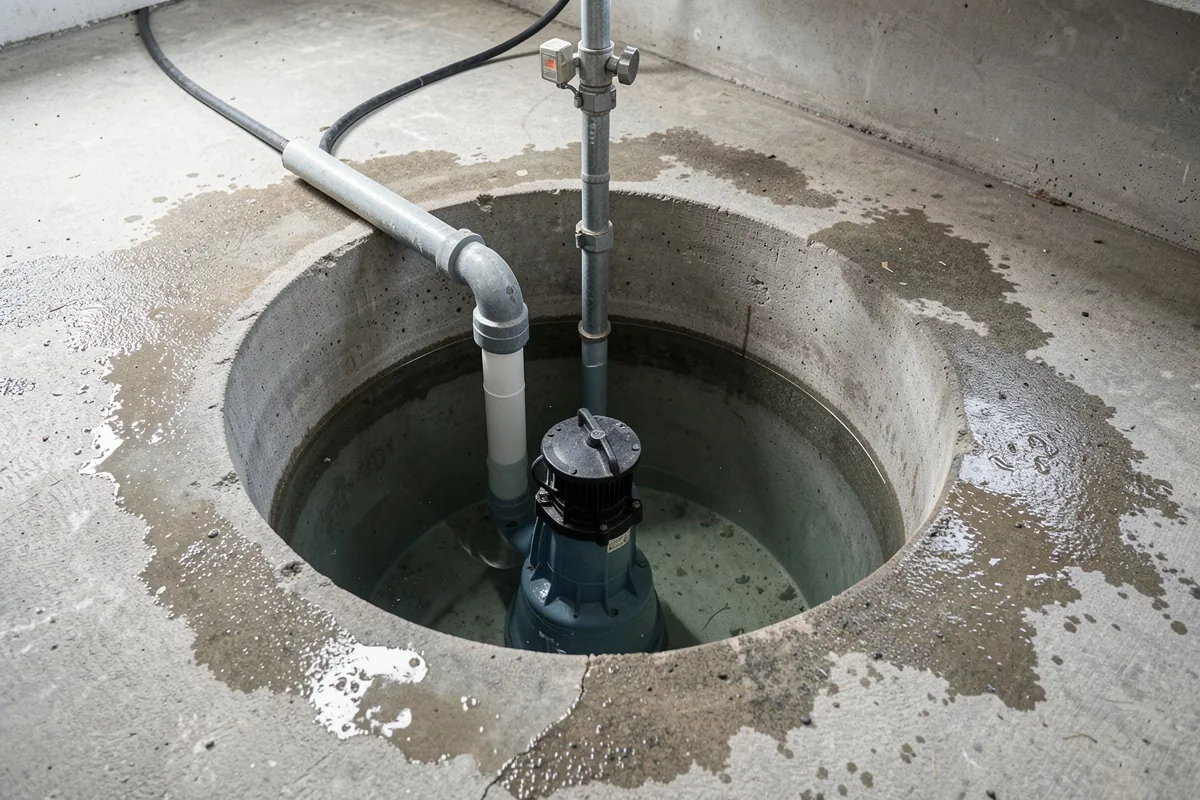
The first step after a crawl space flood is removing standing water, but it is only the first step. A sump pump or a wet vacuum gets the puddle out; it does not dry the joists, the subfloor, the insulation or the soil. If the space is closed up while the wood is still wet, the moisture has nowhere to go.
Professional drying uses air movement and dehumidification, with readings taken on the wood and in the air. In a crawl space, equipment placement is different from a room: the space is low, access is tight, and the drying goal is the structural wood, not the air. A technician may remove wet insulation, open a contained area, and use a desiccant or refrigerant dehumidifier with ducted air movers. The work is measured daily against a dry standard.
Do not confuse a vapor barrier or a new sump pump with a dry-out. Both are good long-term improvements, and both can be part of the repair, but neither pulls moisture out of framing that is already wet. Drying comes first, then the correction that keeps water out.
What a Professional Crawl Space Dry-Out Looks Like
- Safety and access: check for standing water near electrical equipment, confirm the space is safe to enter, and set up lighting and containment.
- Source control: find the leak or the entry point. A plumbing repair, a foundation patch or temporary drainage may be needed before drying can hold.
- Extraction and removal: pump or vacuum standing water, remove saturated insulation and debris, and dispose of material that cannot be saved.
- Structural drying: position air movers and dehumidifiers to dry joists, subfloor and sill plates, with readings recorded each visit.
- Verification and correction: confirm the wood has reached a dry standard, then address drainage, vapor barrier and ventilation so the space does not refill.
Preventing the Next Wet Season
Start outside. Clean gutters and extend downspouts well away from the foundation. Check that the soil slopes away from the house rather than toward it. Look for cracks in the foundation and around pipe penetrations, and seal them. If the crawl space has a bare soil floor, a sealed vapor barrier reduces the moisture that evaporates upward.
Inside, insulate supply lines and check the water heater pan and washing machine hoses. Keep the access panel closed and sealed. If the space has a history of seepage, a sump and drainage system may be appropriate, but it should be designed for the site rather than added as a generic fix. A battery-powered leak alarm in the crawl space can catch a slow leak before it becomes a structural issue.
When to Call Rather Than Wait
Call when there is standing water, when a joist or subfloor feels soft, when mold is visible, or when a musty smell persists after a wet stretch. Also call if a plumbing leak has been running into the space for more than a day, even if the water has stopped. The earlier the drying starts, the more framing and insulation can be saved rather than replaced.
Frequently asked questions
How do I know if my Oregon crawl space has water damage?
A musty smell, soft or sagging floors, condensation on ducts, dark staining on joists and compressed insulation are common signs. A moisture meter on the framing confirms whether the wood is wet.
Can I just run a fan in the crawl space?
A household fan moves air but does not remove moisture from wood or soil. In a humid Oregon crawl space, it can pull damp outdoor air in. Measured drying uses dehumidification and controlled air movement.
Does a vapor barrier fix a wet crawl space?
A vapor barrier reduces moisture coming up from the soil, but it does not dry framing that is already wet and it does not stop a plumbing leak or foundation seepage. The source has to be corrected first.
How long does crawl space drying take?
A typical crawl space takes four to seven days of equipment time, depending on how long it was wet, how much insulation was affected and the outdoor humidity. Readings decide when drying ends.
Is crawl space mold a health hazard?
Mold in a crawl space can affect indoor air because the space often communicates with the house through ducts and gaps. Visible growth on structural wood is handled with containment, removal and air scrubbing rather than surface cleaning alone.
Water where it should not be?
Call (833) 781-1831 and describe what you are seeing. The line is answered by real people 24 hours a day, and we connect Oregon homeowners with independent local restoration providers.